When evaluating smart home devices for genuine energy savings, the key questions are: what does it cost to buy and install, what is the realistic annual saving on energy bills, and therefore how long before the device pays for itself? The answers eliminate most of the market and focus attention on a small number of products where the evidence is clear.
Smart Thermostats
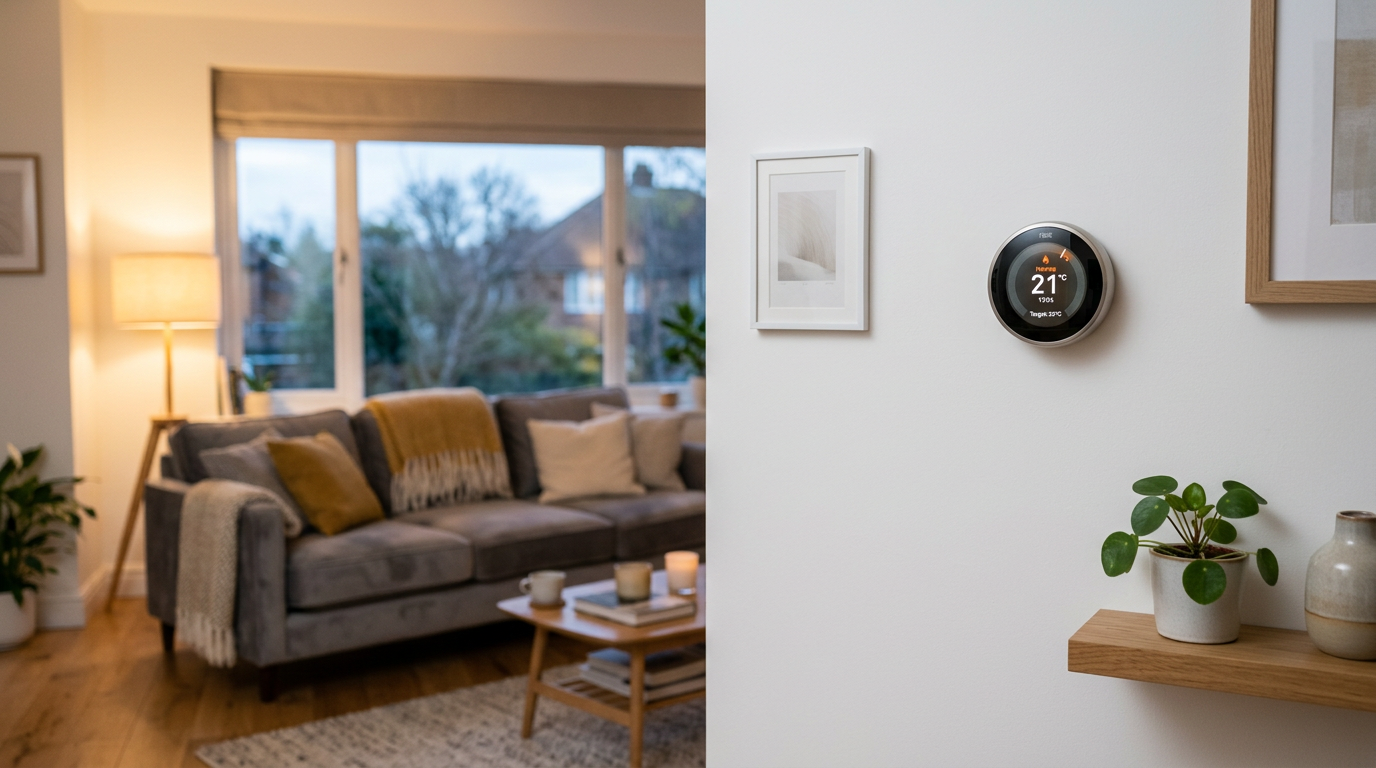
A smart thermostat replaces a standard programmable thermostat and adds features: remote control via smartphone, learning algorithms that adapt to your patterns, geofencing (heating reduces when you leave the house, warms up before you return), and integration with weather forecasts.
The evidence for energy savings is solid. Studies by the manufacturers and independent assessments typically show savings of 10-15% on heating bills. For a household spending £1,000 per year on gas heating, that represents £100-150 annually.
Nest Learning Thermostat
Cost: approximately £219 installed
The Nest's learning algorithm is genuinely effective — it observes your heating patterns over the first few weeks and builds a schedule automatically. It integrates with Google Home and most smart home systems. Professional installation is recommended but not always required.
Hive Active Heating
Cost: approximately £179 installed (often cheaper through British Gas, which owns Hive)
The Hive system is more straightforward than Nest — it is a smart version of your existing schedule rather than an autonomous learning system. This suits households with consistent routines. Customer service and installation support are generally well-rated.
tado° Smart Thermostat
Cost: approximately £129 self-installed
tado° has a good reputation for geofencing accuracy and is particularly strong on multi-zone control — it can manage individual rooms rather than the whole house, if combined with its smart radiator valves. The subscription element (for some features) is worth noting.
Payback period for smart thermostat: 1.5-3 years depending on current heating spend and thermostat cost
Smart Thermostatic Radiator Valves (TRVs)
Standard thermostatic radiator valves let you set different temperatures in different rooms, but not schedules — they just limit maximum temperature. Smart TRVs add scheduling, remote control and integration with your main thermostat.
The benefit is significant in households where some rooms are heated unnecessarily — a spare bedroom, a study only used at certain hours, rooms that receive significant solar gain during the day. Studies by the Energy Saving Trust suggest smart TRVs can reduce heating costs by 8-12%.
tado°, Drayton Wiser and Honeywell Evohome are the main options in the UK market. Costs per valve range from £50-90; a typical home might fit 6-10 valves, giving a total cost of £300-900. Payback periods of 2-4 years are realistic for households with multiple unused or differently-used rooms.
Smart Meters
Smart meters do not directly save energy — they monitor it. The saving comes from what you do with the information. Research consistently shows that households with an In-Home Display (the small screen that shows real-time energy use in pounds and pence) reduce consumption by 2-5% compared to those without one.
Smart meters are being rolled out by all energy suppliers at no direct cost to the householder. If you have not yet been offered one, contact your supplier to request installation. Beyond the consumption-awareness benefit, smart meters enable accurate billing, eliminate estimated readings and — increasingly — allow access to time-of-use tariffs that are cheaper at off-peak times.
Cost: Free (rolled out by suppliers). Saving: 2-5% on energy bills — approximately £50-120/year for a typical household.
Smart Plugs with Energy Monitoring
Smart plugs with energy monitoring (such as the TP-Link Tapo P115 or Meross MSS310) cost £10-20 each and let you see exactly what each plugged device is consuming. The primary value is identification — once you know that a particular appliance is drawing 150W in standby, or that your tumble dryer costs £1.20 per cycle, you can make informed decisions.
The direct saving depends entirely on what you discover and change. For households with older appliances or habitual over-use of high-consumption devices, the monitoring function can easily identify £50-100 of annual savings. As a diagnostic tool before investing in larger efficiency measures, smart plugs are inexpensive and informative.
LED Lighting
LED bulbs are not a "smart home" product in the connected sense, but they are the single most cost-effective energy upgrade available to most households. A household that has not switched all lighting to LED is losing money continuously. An LED replacement for a 60W incandescent uses 8-10W and lasts 15,000-25,000 hours versus 1,000 hours for incandescent.
The saving per bulb per year is small, but across a whole household it adds up — and the running costs are so much lower that the payback on the bulb cost is typically six months or less.
| Upgrade | Typical cost | Annual saving | Payback period |
|---|---|---|---|
| Smart thermostat | £130–220 | £100–150 | 1–2 years |
| Smart TRVs (full set) | £300–900 | £80–120 | 2–4 years |
| Smart meter | Free | £50–120 | Immediate |
| Smart plugs (set) | £40–80 | £50–100 (varies) | Under 1 year |
| LED lighting (whole home) | £50–120 | £40–80 | Under 1 year |
Where to Start
If you have not already done both, request a smart meter from your energy supplier and replace all remaining non-LED bulbs. Both are low-cost, require no technical knowledge and produce immediate, ongoing savings. Smart thermostat installation is the logical next step for most gas-heated homes.