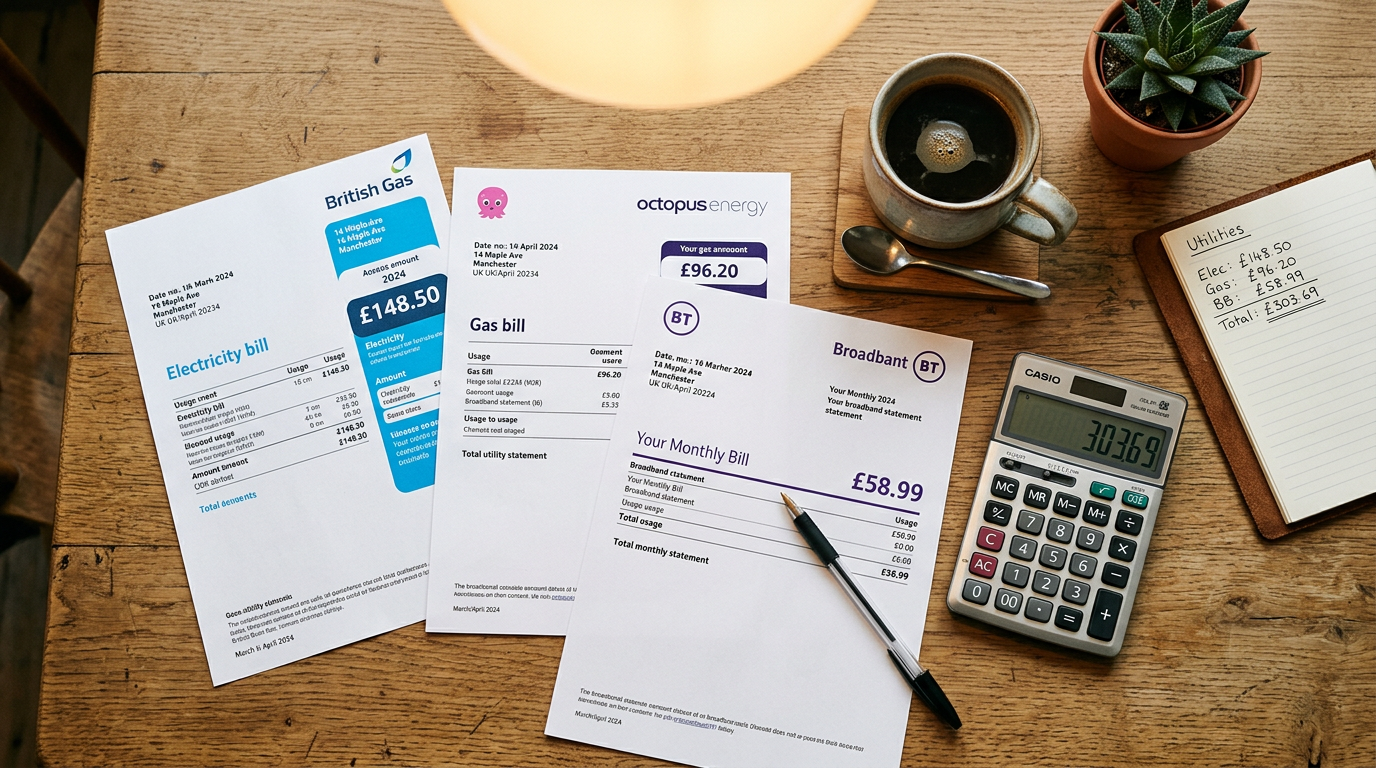
A household bill review is not something most people do regularly. The initial sign-up decision — to a broadband provider, an insurance company, a mobile network — was made at a particular moment, in a particular context, and since then most people have either forgotten about it or found the process of switching too irritating to prioritise. Providers are aware of this. The gap between what loyal, existing customers pay and what new customers can access is a reliable feature of almost every subscription or service market in the UK.
Running through the following categories methodically, even once a year, typically produces savings of several hundred pounds. The total is almost always higher than people expect.
Energy
Since the introduction of Ofgem's price cap, switching energy supplier rarely saves money compared to the cap rate — the cap limits what any supplier can charge, and most competitive deals hover near it. The real savings in energy come from checking that you are on the correct tariff, that your direct debit is accurately set (not accumulating large credit on your account), and from the efficiency side — fixing drafts, insulating the loft, turning down the thermostat by one degree (worth around 10% on your heating bill).
Typical saving from tariff review and direct debit check: £50-150/year
Broadband
This is where the largest single savings are often found. The broadband market has a significant new-customer/existing-customer price gap. Loyalty is not rewarded — it is exploited. A customer who signed up two years ago and has not reviewed their contract is likely on an out-of-contract rate or a rate that has risen substantially since sign-up.
The process for switching is straightforward under Ofcom's One Touch Switching rules. Check comparison sites for current deals in your area. If you find a better deal elsewhere, contact your current provider first — retention teams typically have access to discounts not available on the main website.
Typical saving from switching or negotiating: £120-360/year
Mobile Phone Contract
If you are still on a handset contract that includes the device cost but your phone is now two or three years old and paid off, you are likely overpaying by £10-25 per month for service you have already received. Moving to a SIM-only plan once the handset is paid off is one of the most reliably effective bill-reduction moves available.
Similarly, if you are on a large data allowance but consistently use a fraction of it, there is a cheaper plan that better matches your actual usage.
Typical saving from switching to SIM-only or right-sizing data: £120-300/year
Home Insurance
Home insurance (buildings and contents) is an area where loyalty is actively penalised. The practice of charging existing customers more than new customers was targeted by FCA rules introduced in 2022, which require insurers to offer renewal prices no higher than the equivalent new-customer price. Compliance has been partial; comparison at renewal is still necessary.
Always check your level of cover when reviewing — it is common to be underinsured on contents, particularly if the value of electronics, jewellery or other valuables has increased since the policy was written.
Typical saving from switching or negotiating at renewal: £80-200/year
Streaming Services
The average UK household with multiple streaming subscriptions is paying for at least one they rarely use. An audit of what you actually watch — rather than what you might watch — typically reveals a subscription or two that can be cancelled or paused without affecting day-to-day viewing. Most streaming services allow cancellation and reactivation freely, so there is no penalty for pausing during periods of low use.
Many services also have annual payment options that work out cheaper than month-by-month; if you are certain of using a service for 12 months, the annual rate typically saves 15-20%.
Typical saving from subscription audit: £60-200/year
Car Insurance
Like home insurance, car insurance is subject to the FCA pricing rules, but comparison at renewal remains the most reliable strategy. The savings from switching can be significant — particularly for drivers who have been with the same insurer for several years without incident.
Typical saving from switching at renewal: £100-400/year
| Category | Action required | Typical annual saving |
|---|---|---|
| Broadband | Switch or negotiate | £120–360 |
| Mobile | Switch to SIM-only or right-size plan | £120–300 |
| Car insurance | Compare at renewal | £100–400 |
| Home insurance | Compare at renewal | £80–200 |
| Streaming | Audit and cancel unused services | £60–200 |
| Energy | Tariff review, direct debit check | £50–150 |
The One-Hour Annual Review
Set aside an hour once a year — perhaps around the same time each year, such as when clocks change or after the new year — to go through these six categories. Running through each with a comparison site or a direct call to your provider will consistently produce savings that far exceed the time invested.