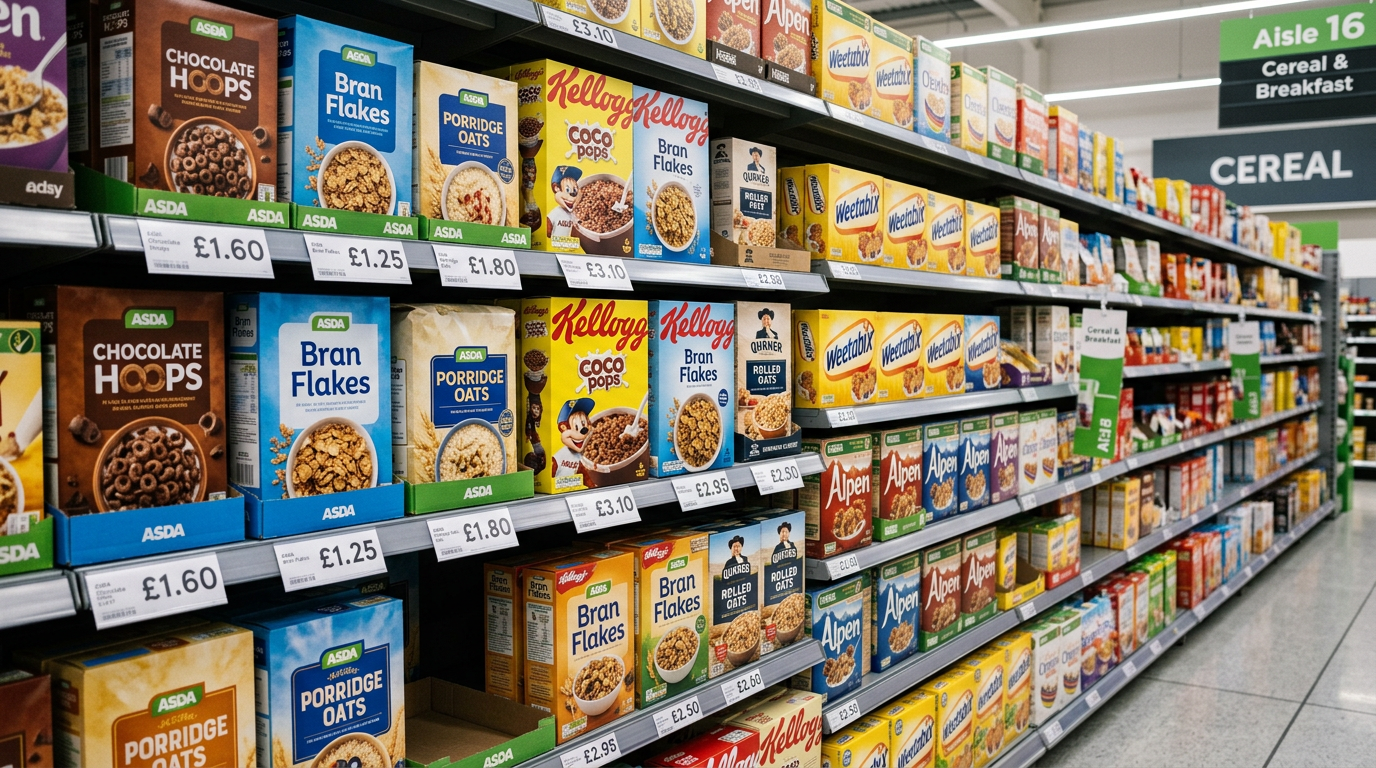
The UK's major supermarkets — Tesco, Sainsbury's, Waitrose, M&S, Asda, Morrisons — all have well-developed own-label ranges. The discount supermarkets — Aldi and Lidl — operate a model where own-label products are virtually the entire offering. The penetration of own-label products in UK food retail is among the highest in Europe.
The conventional wisdom is that branded products are better. This is sometimes true, often irrelevant, and occasionally reversed. The reality is category-specific, and knowing which categories fall into which bucket is more useful than a general preference for branded or own-label.
Where Own-Brand Is Equal or Better
Basic Dried Goods
Pasta, rice, flour, sugar, salt, lentils, tinned tomatoes, tinned chickpeas, tinned beans — these are commodities. The own-brand version is frequently produced in the same facilities and by the same suppliers as the branded version. The pasta is pasta; the flour is flour. Price differences of 50-70% for no discernible quality difference are common in this category. Switch without hesitation.
Fresh Produce
Supermarket own-label fresh vegetables and fruit are typically identical in quality to branded equivalents because there are essentially no branded fresh vegetables — the category is own-label by default. The question here is whether to shop at a supermarket at all for produce, or whether a local market, farm shop or vegetable box scheme offers better value and quality.
Dairy (Most Products)
Own-label milk, butter, cream, basic cheddar, natural yogurt and eggs are consistently good across major supermarkets and represent genuine value. The premium difference for branded butter (Lurpak vs own-label) is often more than twice the price for a product whose quality difference is minimal in most cooking applications.
Where branded dairy earns its premium: distinctive soft cheeses (St Agur, Brie de Meaux), and cultured products where the specific bacterial culture and process matters — high-quality Greek yogurt, crème fraîche at the premium end.
Over-the-Counter Medicines
This is the most financially significant switching opportunity. Branded painkillers, antihistamines, antacids, cold remedies and most common OTC medicines contain exactly the same active ingredients as own-label equivalents, at legally identical doses. The branded version costs two to four times more. A 16-pack of branded ibuprofen 400mg tablets costs around £4; the own-label equivalent costs around £1. The active pharmaceutical ingredient is legally required to be identical. There is no clinical rationale for choosing branded over own-label in this category.
Cleaning Products
Cleaning products vary more than medicines — formulations differ — but own-label versions are generally effective for standard household cleaning at significantly lower prices. Supermarket own-label washing up liquid, multi-surface cleaner, toilet cleaner and dishwasher tablets consistently perform well in consumer testing.
Where Branded Still Earns Its Price
Coffee
Ground and instant coffee is one category where the branded premium is usually justified by a genuine quality difference. Good coffee — whether beans, ground or capsule format — involves specific sourcing, roasting and quality control that commodity own-label products do not replicate. Own-label instant coffee is broadly acceptable; own-label ground coffee is often noticeably inferior to branded equivalents. Capsule systems (Nespresso, Dolce Gusto) are essentially brand-locked by design.
Chocolate
Own-label chocolate has improved substantially, but the major branded chocolate manufacturers — Cadbury, Lindt, Green & Black's — have house styles, chocolate textures and flavour profiles that own-label versions do not consistently replicate. In chocolate, brand identity is often inseparable from the actual product experience.
Condiments and Sauces with Heritage
Heinz ketchup, Lea & Perrins Worcestershire sauce, Marmite, HP sauce — these are products where the specific formulation is the product. Own-label ketchup is a different product from Heinz ketchup, not an interchangeable substitute. Whether the difference matters is a personal call; but these are cases where "same but cheaper" does not quite apply.
Specialist or Artisan Products
The supermarkets' mid-tier and premium own-label ranges (Tesco Finest, Sainsbury's Taste the Difference, M&S Food) have improved considerably and often represent good value at their respective price points. But genuinely artisan products — bread from a local bakery, cheese from a specific producer, cured meat from a specialist — represent something the own-label supply chain cannot replicate.
Practical Approach
On your next weekly shop, switch to own-label versions of: all dried goods, dairy basics, cleaning products, OTC medicines, and canned goods. Keep branded versions of the specific products where you have a strong preference. Most people find that 60-70% of their basket can switch to own-label without noticeable impact — and the saving on a typical £100 weekly shop is often £20-35.