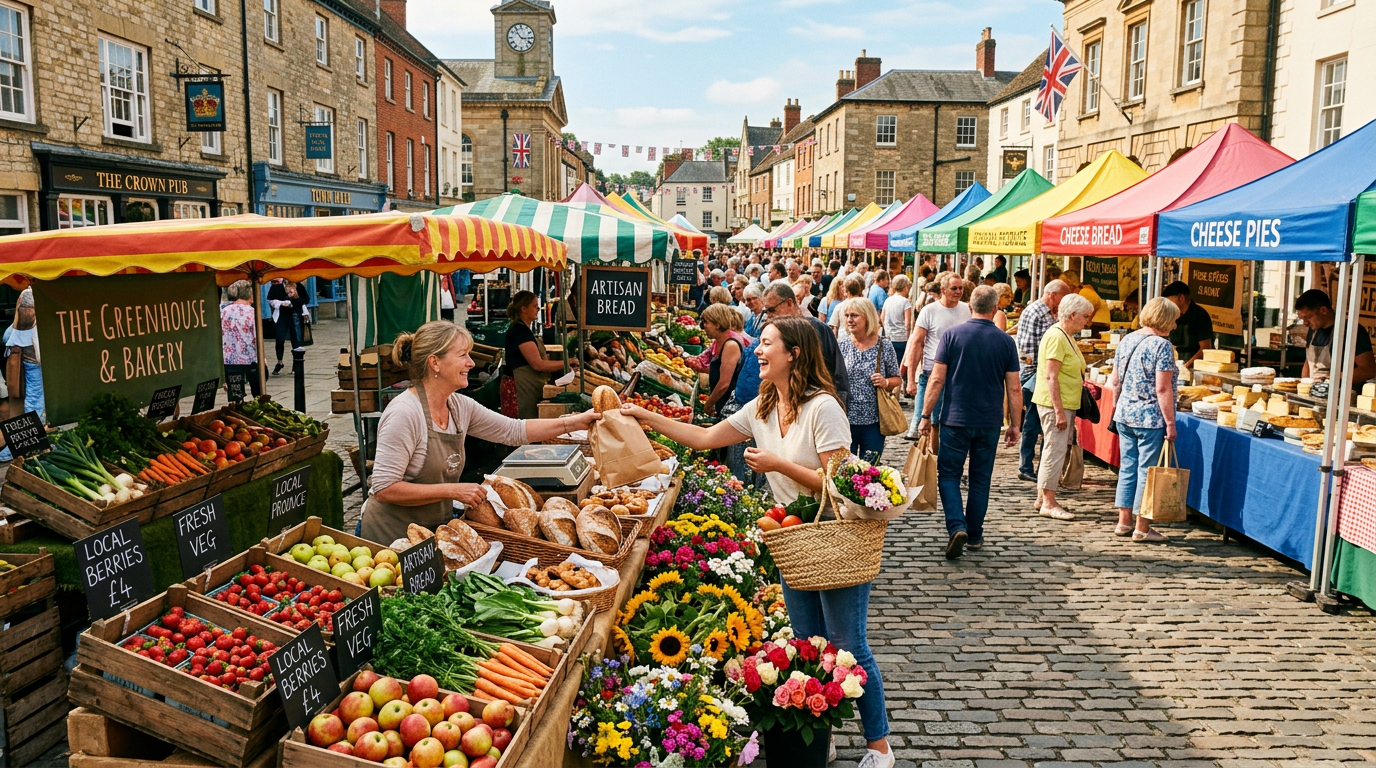
The supermarket may have won the weekly shop, but it has not won the weekend. Independent markets — food, craft, antique, vintage and general — continue to thrive across the UK, offering not just produce and goods but the particular atmosphere of a place where people have chosen to sell and buy directly from one another.
The best markets have a character that reflects their location. A coastal town market will have seafood and sea-glass jewellery; a market in a cathedral city will likely have excellent baked goods and second-hand books; a city neighbourhood market will have street food from a dozen cuisines alongside hand-stamped cards and small-batch preserves.
London and the South East
London's market scene is extraordinarily varied. Borough Market near London Bridge is the most famous, but its fame has also made it one of the pricier options; it is excellent for browsing and grazing, less so for weekly household food shopping. Maltby Street Market in Bermondsey, by contrast, has retained a more local character and is particularly strong on artisan breads, cured meats and independent coffee roasters.
In the South East, Brighton's Open Market is one of the most varied in the region, with a genuine mix of fresh produce, vintage clothing and maker stalls. The Whitstable Harbour Market in Kent offers excellent local seafood and is best visited on a weekday to avoid summer queues.
The Midlands
Ludlow Market in Shropshire has a well-established reputation for food quality and is worth the journey for its cheese stalls alone. The town has built a genuine food culture over the past two decades, and the market reflects that. Birmingham's Digbeth Dining Club is a different proposition — a street food format that runs on weekends and showcases independent food businesses from across the region.
For antiques, the Newark Antiques and Collectors Fair in Nottinghamshire is one of the largest of its kind in Europe, running several times a year and drawing dealers and collectors from across the country.
The North of England
Leeds Kirkgate Market is the largest covered market in Europe and one of the genuine originals — trading continuously since the Victorian era. It combines everyday groceries with independent butchers, fishmongers, fabric stalls and food traders, and functions as a working market rather than a tourist attraction. Manchester's Mackie Mayor food hall in the Northern Quarter has transformed a former meat market into a well-curated independent food destination.
In the North East, Grainger Market in Newcastle is similarly well-preserved and well-attended, with an impressive range of independent traders alongside the practical staples.
Wales
Cardiff Central Market is a Victorian covered market that has maintained its independence admirably. Abergavenny Food Festival, held annually in September, is technically more festival than market, but it operates along similar principles and has become one of the most respected food events in the UK.
Rural Wales is well served by a network of smaller agricultural and general markets — Builth Wells and Welshpool both have regular livestock and produce markets that are open to the public and give a genuinely different perspective on how food moves through a region.
Scotland
Edinburgh Farmers' Market on Castle Terrace is one of the longest-running farmers' markets in Scotland, with a reliable selection of produce from the Lothians and beyond. Glasgow's Barras Market is a different experience — a sprawling East End institution where the range runs from antiques and collectables to general household goods, and the atmosphere is as much the attraction as any individual stall.
What to Look For
The best way to assess a market quickly is to look at who is selling. A genuine independent market will have producers — people who made, grew or caught what they are selling — alongside dealers and vintage traders. Markets that consist primarily of commercial resellers selling mass-produced goods at outdoor prices have a different character entirely.
- Arrive early for the best selection, particularly at food markets where popular producers sell out.
- Carry cash — many smaller stall holders do not take cards, or have a minimum spend.
- Check whether the market is weekly, monthly or seasonal before making a special journey.
- Most markets have parking challenges; public transport or cycling is usually more practical.
Finding Markets Near You
The FARMA (the National Farmers' Retail and Markets Association) website maintains a searchable directory of certified farmers' markets across the UK. Local council websites typically list chartered markets in their area. The Love Your Local Market initiative also publishes regional directories updated annually.
The independent market is not competing with the supermarket — it is offering something the supermarket structurally cannot: provenance, conversation, the knowledge that your money goes directly to the person who made the thing. That difference matters to more people than ever.